
Do you have a feeling that your hair becomes greasy only a day after washing? You’re not alone. Many people have a problem with an oily head that causes hair to appear flat, sticky, and uncontrollable.
This may be frustrating- especially when you are trying all that you can, but nothing seems to help. The fact is that oily hair is not only a matter of cleanliness. It is commonly associated with your head, hormones, and even your day-to-day routines.
The good news? Following the correct oily hair remedies, you can control excess oil, improve scalp health, and keep your hair looking fresh for longer.
In this guide, we are going to discuss the reasons, the best remedies, and professional treatments that help you manage oily hair the right way.
Why Does Your Hair Get Oily So Fast? (Causes)
Understanding the cause is the first step toward finding the right oily hair remedies.
Overactive Sebaceous Glands
On your scalp, there are small glands known as sebaceous glands that produce oil (sebum). This is a natural oil that keeps your hair healthy.
But when these glands are overstimulated, they secrete too much oil and make your head greasy and hair limp.
Hormonal Imbalance
Hormones are significant in oil production. Excess oil production can be triggered by changes in puberty, stress, menstruation, or conditions like PCOS.
That’s why many people notice sudden oily hair during certain life stages.
Overwashing or Using Wrong Products
It may seem that washing your hair too often could be a solution; however, it may result in more problems, producing more oil and even scalp dryness in some cases.
Harsh shampoos wash away natural oils, causing your scalp to react by producing even more oil.
Product Buildup
Excessive styling products, conditioners, or dry shampoos can lead to buildup on your scalp.
This buildup traps oil and dirt, making your hair look greasy faster than usual.
Hair Type & Genetics
Oil transfers faster between the scalp and the strands, especially when you have fine or thin hair.
Genetics also contributes to this; some people produce more oil naturally than others.
7 Best Oily Hair Remedies That Actually Work
The following are the best and most useful oily hair remedies that can be started today:
1. Wash Hair the Right Way
Having clean hair is more important than how often you wash it. Many people overwash or do not wash their scalp properly.
Rather than washing every day, wash 2-3 times a week with a mild shampoo. When washing, pay attention to the area where the oil build-up is most. Massage (not scratch) dirt and oil with your fingertips.
Do not scrub your hair’s length much; this can cause dryness and damage. Washing is also a proper way of balancing oil production without making your scalp produce more oil.
2. Use a Mild, Sulfate-Free Shampoo
Shampoo is important in the management of oily hair. The harsh shampoos that contain high levels of sulfates can strip your scalp’s natural oils.
When this happens, your scalp is trying to make it up by secreting more oil, greasing up your hair even more quickly.
A simple but effective oily hair remedy is to switch to a mild or sulfate-free shampoo. These shampoos make your head clean without disrupting the natural balance of your scalp, removing excess oil in the long run.
3. Condition Only the Ends
Conditioner is also most effective to keep your hair soft and manageable, but when you use it improperly, it makes your hair greasy.
A common mistake is the direct application of conditioner to the scalp. This can weigh your hair down and increase oiliness.
Rather, you should only apply conditioner to the mids and ends of your hair, in areas where it is needed. This maintains your hair and does not add any additional oil to your scalp.
4. Try Apple Cider Vinegar Rinse
Apple cider vinegar is a trendy natural oily hair remedy that helps to restore the pH balance in your scalp and cleanse the product buildup.
In the long run, the remains of shampoos, conditioners, and styling products will be deposited on your scalp and make your head look greasy and dull.
Add 1-2 tablespoons of apple cider vinegar to a cup of water to use as a final rinse after shampooing. It is also effective in cleansing the scalp, reducing oiliness, and making hair look natural and shiny.
5. Apply Aloe Vera Gel
Aloe vera is also famous for its calming and oil-regulating effects, which is why it is a great solution for an oily scalp.
It helps in eliminating the excess oil and irritation, and provides a healthy scalp environment. Aloe vera is very gentle and does not dry your hair.
You can use fresh aloe vera gel on your scalp and leave it there for 20-30 minutes, and then wash it off with a mild shampoo. Consistent usage can ensure that the production of oil remains under control.
6. Use Tea Tree Oil (Diluted)
The tea tree oil is very popular in scalp care since it has antibacterial and oil-balancing effects.
It helps unclog hair follicles, reduce buildup, and control excess sebum production. However, it should never be used directly on the scalp without dilution, as it can irritate.
To your shampoo, add a few drops of tea tree oil or combine it with a carrier oil (such as coconut or jojoba oil) and then apply it. This simple step can be used in your daily routine to improve scalp health.
7. Avoid Touching Hair Frequently
It may not seem harmless, but touching the hair frequently makes it oilier faster.
Natural oils, dirt, and bacteria are present on your hands, and they are easily transferred to your hair and scalp. This contributes to the already existing oil and gives your hair the appearance of being dirty within hours.
Home Remedies for Oily Hair (Natural Solutions)
When you do not want to use products with chemicals in them, but instead use natural techniques, these home remedies may help as a nice addition to your oily hair remedies routine. They are soft on the scalp, convenient, and can be used to manage excess oil if used regularly.
Multani Mitti (Clay Mask)
Multani mitti or Fuller’s earth is a great absorbent for excess oil on the scalp. It is a natural cleanser that does not contain harsh chemicals but removes dirt, grease, and buildup.
Multani mitti can be mixed with water or rose water to form a smooth paste and applied to your scalp. Allow to dry for 20-30 minutes and then rinse. It not only makes the skin less oily but also makes your scalp cool and clean.
Lemon Rinse
Lemon is a natural astringent that can be used to control the production of oil in the scalp and cleanse the scalp of excess oil.
You may combine fresh lemon juice and water and use it as a final shower after shampooing. It assists in squeezing pores on the scalp, making the hair less greasy, and making you feel light and fresh. However, it should not be used excessively because it may, at times, dry the scalp.
Green Tea Rinse
Green tea is full of antioxidants that help in the regulation of the production of sebum (oil) and the health of the scalp.
You can use this remedy by brewing green tea, leaving it to cool down, and pouring it over your scalp after washing your hair. It helps in calming the hair, decreasing the oil levels, and even promoting healthier hair in the long run.
Egg Mask
Eggs contain a lot of proteins and nutrients that feed your hair, and also balance the oil levels on the scalp.
To make hair strands firmer and decrease the excess oiliness, you can use an egg mask. To minimize the odor and increase its oil-reducing properties, you can add an egg with a little amount of lemon juice. Allow to dry after 20 minutes and then rinse.
These natural remedies may not give instant results, but with regular use, they can effectively support your oily hair remedy routine and improve scalp balance over time.
Daily Hair Care Routine for Oily Scalp
Oily hair requires a proper routine to deal with. Even minor daily routine practices and habits can help a lot in managing excess oil and ensurescalp health.
- Wash your hair 2–3 times a week
Do not overwash, as this will cause more oil to be produced. Wash with mild shampoo and make sure that the scalp is washed properly. - Use lightweight, non-greasy products
Choose products that are specifically designed for oily hair. Heavy creams or serums can weigh your hair down and make it look greasy faster. - Avoid heavy oils on the scalp
Applying oil to an oily scalp will only make the situation worse. If required, use oil on the ends of your hair. - Keep your combs and brushes clean
Dirty tools can transfer oil, dirt, and product buildup back onto your scalp. Clean them regularly to maintain hygiene. - Tie your hair loosely to avoid sweat buildup
Tight hairstyles can trap sweat and oil on the scalp. Keeping your hair loose will keep your scalp breathing and will make your hair less oily.
Common Mistakes That Make Hair Greasier
Even basic everyday routines may sometimes worsen the oily hair without you even knowing. It is equally crucial to prevent these errors in addition to using the correct remedy for oily hair.
- Overwashing your hair
Excessive washing may make your scalp lack the natural oils, and it will end up producing more to make up. - Using heavy conditioners or oils
Thick conditioners and heavy oils can weigh your hair down and make it look greasy quickly, especially if applied near the scalp. - Applying oil directly to an already oily scalp
Adding more oil to an oily scalp can clog pores and worsen buildup, making your hair feel sticky and unclean. - Not cleaning hair tools regularly
Dirty combs and brushes carry oil, dust, and product residue, which can transfer back to your scalp and increase oiliness.
When Oily Hair Could Be a Medical Issue
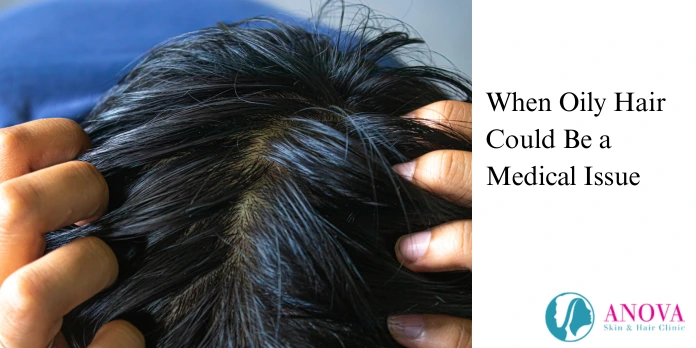
Oily hair might not only be an issue of daily care. It may be linked to the existing scalp or health problems, which need to be treated properly.
Watch out for signs like:
- Excessive oiliness even after proper care
When your hair gets greasy within a very short time, even when you have a good routine, then it may be that your oil glands are overactive or underlying imbalance. - Persistent dandruff or itching
Scalp flakes, irritation, or itch can be an indication of conditions such as dandruff or seborrheic dermatitis. - Hair fall along with a greasy scalp
Sometimes the excess oil may block the hair follicles, resulting in weak roots and loss of hair.
Dermatologist Treatments for Oily Scalp
In case home remedies are failing to achieve the intended result, professional treatments would help in the management of an oily scalp. The solutions suggested by dermatologists are specific and based on the root cause of the problem.
Dermatologists may recommend:
- Medicated shampoos to control oil and dandruff
These shampoos contain active ingredients that help reduce excess oil, control flakes, and keep the scalp clean without over-drying. - Scalp treatments to balance oil production
Special care should be taken to control the level of sebum production and the health of the scalp in general, making it less greasy most of the time. - Treatment for hormonal imbalance, if needed
If oily hair is linked to hormonal changes or conditions, doctors may suggest appropriate medical treatment to address the underlying cause.
Conclusion
Oily hair can be annoying to handle, but it is not something that can’t be managed. It is important to know what causes it, follow a correct routine, and apply effective remedies.
If your oily scalp is not improved even after using these solutions, then you should see a dermatologist and get a personalized treatment.
The correct action now will make you have healthier and fresher-looking hair in the future.
FAQs:
How to get rid of oily hair naturally?
Oily hair can be treated with natural remedies such as aloe vera, apple cider vinegar, and multani mitti. In addition to this, follow a good hair care routine and avoid over-washing and applying heavy products.
Why does my hair get oily so fast?
Excess sebum production, hormonal variation, overwashing, or product buildup on the head all cause hair to become oily. It depends on your hair type and daily habits as well.
Can oily hair be treated permanently?
Oily hair can not be treated permanently. However, it can be managed with the help of the appropriate oily hair remedy, proper routine, and medical treatment in some cases.
How often should I wash oily hair?
It is recommended to wash your hair 2-3 times a week, usually. Overwashing hair can trigger more oil production or sometimes cause dryness in the scalp, so it's important to follow a balanced routine.
What is the best oily hair remedy?
The optimal solution to oily hair is a mixture of mild cleansing, application of the appropriate products, and natural solutions, such as aloe vera or apple cider vinegar, with a consistent routine.