
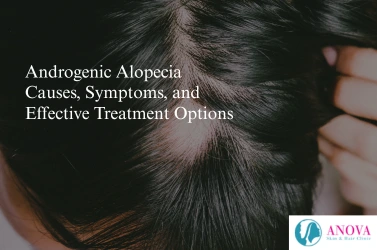
Hair loss is a widespread issue that can occur in both men and women and has a tangible effect on self-esteem, confidence, and emotions. Although hair thinning may be due to a number of causes, progressive and slow hair loss is usually a cause of concern and makes people consult the doctor.
Androgenic alopecia or pattern hair loss is one of the most frequent causes of long-term hair thinning. It is a condition that is affected by genes and hormones and is usually acquired gradually with time. Knowledge of the causes, symptoms, and treatment of androgenic alopecia enables people to seek prompt treatment and control hair loss in a better way.
What Is Androgenic Alopecia?
Androgenic alopecia is a genetically determined form of hair loss that is brought about by the sensitivity of hair follicles to androgens (hormones). It causes progressive loss of hair as opposed to abrupt loss of hair.
The condition is not similar to other types of hair loss as it has a predictable pattern and it develops gradually. The hair follicles do not die but shrink over time, as opposed to the destruction of hair follicles in autoimmune or scarring hair loss.
Hormonal influence and inherited traits play a major role, which explains why androgenic alopecia often runs in families.
What Causes Androgenic Alopecia?
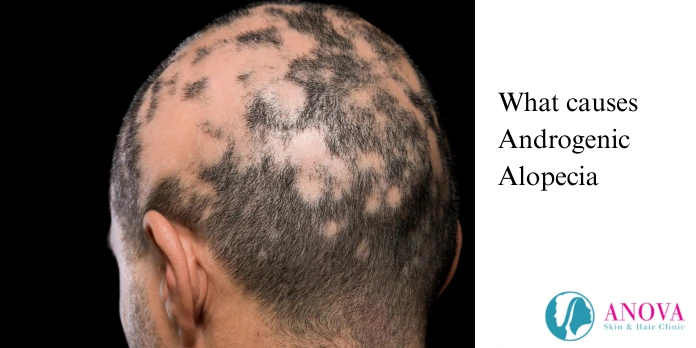
Androgenic alopecia is a condition that is caused by a complex of genetic and hormonal factors that influence the growth and functioning of hair follicles with age. Knowledge of these reasons can be used to understand why hair thinning is predictable and why early treatment can be used to slow it down.
Genetic Vulnerability
The primary cause of androgenic alopecia is inherited genetics. If close family members, such as parents or grandparents, have experienced pattern hair loss, the likelihood of developing the condition increases. These genetic factors determine how sensitive hair follicles are to hormonal changes, making some individuals more prone to gradual hair thinning than others.
Role of Androgens
Androgens are hormones that are significant in the control of hair growth. Hair follicles in patients with androgenic alopecia are excessively sensitive to these hormones, especially dihydrotestosterone (DHT). This sensitivity affects the normal hair growth cycle in that the hair takes less time in the growth phase and more time in the resting phase.
Hair Follicle Reduction
As the hormonal effect continues, the size of the affected hair follicles gradually reduces, a process referred to as miniaturization (the process of making things smaller). With a smaller follicle, thinner, shorter, and weaker hair strands are produced. In the long run, it causes observable thinning of the scalp and diminished hair density, which are characteristic of androgenic alopecia.
Progressive Nature
Androgenic alopecia is not an acute disease but a gradually developing one. The thinning of the hair takes place over months or years, which is why it is very hard to notice in the initial stages. Hair loss becomes more pronounced as the condition progresses, which is why it is important to realize it early and manage it on time.
Common Symptoms of Androgenic Alopecia
The effects of androgenic alopecia tend to progress slowly, and that is why they are ignored at an early stage. This disorder leads to gradual thinning and not abrupt loss of hair, and it has a predictable pattern. Recognizing these symptoms early allows for timely intervention and better hair loss management.
Gradual Hair Thinning
Hair is gradually becoming finer and weaker with time, particularly on the top of the head and around the crown. As the hair density reduces, the scalp can be seen much more, which is an indication of early androgenic alopecia.
Male Pattern Hair Loss
In men, androgenic alopecia commonly presents with the following features:
- Receding hairline
Hairline gradually moves backward, especially at the temples, forming an “M” shape. - Thinning at the crown
Hair loss begins at the top or back of the scalp and slowly expands. - Progressive baldness
In advanced stages, thinning areas may merge, leading to partial or complete baldness.
Female Pattern Hair Loss
In women, androgenic alopecia typically appears with these signs:
- Diffuse thinning over the scalp
Hair density decreases evenly across the scalp rather than in isolated patches. - Widening of the hair part
The central part becomes more visible as hair thins gradually. - Preserved frontal hairline
Unlike men, the front hairline usually remains intact, even as thinning progresses.
Slow Progression
Androgenic alopecia occurs gradually and takes months or years. Since changes are gradual, initial phases can be unnoticed. Early detection is also relevant because prompt treatment can be used to slow down further loss of hair.
Who Is at Risk of Androgenic Alopecia?
Androgenic alopecia may be experienced by a very broad population of people, but certain factors increase the likelihood of developing this condition. Knowledge of the risk factors can be used to identify hair loss early and manage it in time.
- Individuals with a family history of hair loss
Androgenic alopecia is largely contribute by genetics. In case the pattern hair loss has been observed in close family members, the likelihood of developing the condition is high because the hair follicles are sensitive to inherited conditions. - Men and women after puberty or adulthood
Androgenic alopecia is usually initiated af ter puberty when hormones become active. Although men tend to notice the symptoms earlier, in later adulthood, women might experience gradual thinning. - People experiencing hormonal changes
The hormonal changes associated with conditions, medications, or life stages may contribute to the development of androgenic alopecia by changing the hair growth cycle. - Aging individuals
The risk and severity of androgenic alopecia increase with age, as hair follicles gradually become weaker and more sensitive to hormonal effects over time.
Androgen alopecia is more evident in men; however, women are affected by it and should not ignore the initial symptoms. Early diagnosis enables more effective management and slows down the progression.
How Is Androgenic Alopecia Diagnosed?
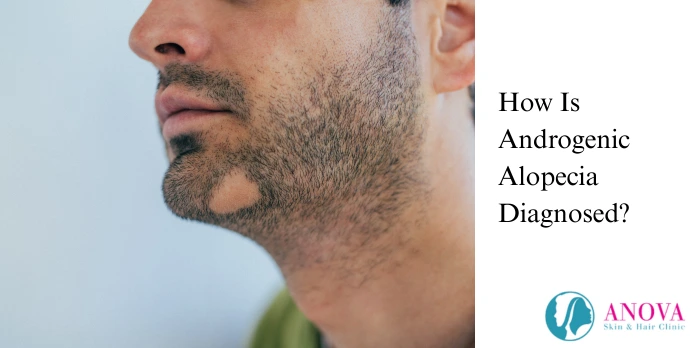
A proper diagnosis is a crucial process in the effective management of androgenic alopecia. Hair loss may be caused by different conditions, so the diagnosis of the exact cause will contribute to the provision of the most suitable treatment plan.
- Clinical Examination
A dermatologist starts by examining the scalp to determine the density of hair, thinning patterns, and the distribution of hair loss. The characteristic patterns seen in androgenic alopecia often provide strong diagnostic clues during this visual assessment. - Medical and Family History
It is significant to review personal and family history since androgenic alopecia is closely related to genetics. Information about the onset, progression, and family occurrence of hair loss helps confirm the diagnosis. - Scalp and Hair Analysis
Diagnostic tools such as dermoscopy allow closer inspection of the scalp and hair follicles. This helps identify follicle miniaturization, which is a key feature of androgenic alopecia. - Additional Tests (If Needed)
In some instances, a blood test can be recommended to eliminate hormonal imbalances, nutritional deficiencies, or other health conditions that can cause hair loss.
A precise diagnosis guarantees the proper treatment strategy and makes it easier to deal with androgenic alopecia in the long-term perspective.
Effective Treatment Options for Androgenic Alopecia
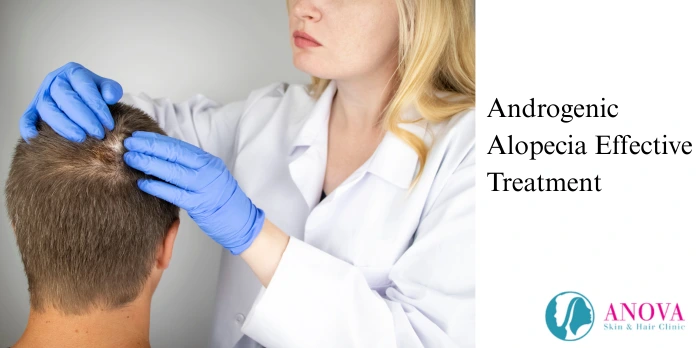
The aim of treatment of androgenic alopecia is to delay the process of hair loss, maintain the remaining hair and stimulate the growth where feasible. Treatment effectiveness is conditional on the early diagnosis, regularity, and the selection of the appropriate method according to the needs of a person.
Topical Treatments
Topical treatments are often the first line of management for androgenic alopecia and are most effective when used consistently over time.
- Improve blood flow to hair follicles
These therapies assist in enhancing blood flow to the head, supplying nutrients and oxygen to the hair follicles, which promotes healthier hair growth and aids in slowing down thinning. - Strengthen existing hair strands
Regular use can improve the thickness and strength of weakened hair strands, making hair appear fuller and reducing breakage. - Require long-term use for best results
Visible improvement takes time, and continued use is necessary to maintain benefits, as stopping treatment may lead to renewed hair thinning.
Oral Medications
Oral medicine acts by treating hormonal causes of androgenic alopecia and is usually prescribed in certain instances.
- Help reduce further hair thinning
These drugs can slow down the loss of hair by lowering the hormonal influences that cause follicle shrinkage. - Must be taken under medical supervision
A dermatologist monitors progress and ensures the treatment is safe and appropriate for long-term use. - Not suitable for everyone
Individual health factors determine whether oral treatment is recommended, making professional evaluation essential.
Advanced and In-Clinic Treatments
Individuals with moderate to advanced androgenic alopecia or those who fail to respond satisfactorily to simple therapies are good to go for advanced therapies.
- Platelet-rich plasma (PRP) therapy
PRP involves the utilization of concentrated growth factors in the blood of the patient to assist in follicle health and hair growth. - Low-level laser therapy
This non-invasive approach helps activate hair follicles and improve hair density with regular sessions. - Hair restoration procedures
These are the procedures that can be considered in the case of stable and severe hair loss, which provide long-term cosmetic enhancement.
Medical therapy is usually used in combination with advanced treatments to produce the best results.
Can Androgenic Alopecia Be Prevented?
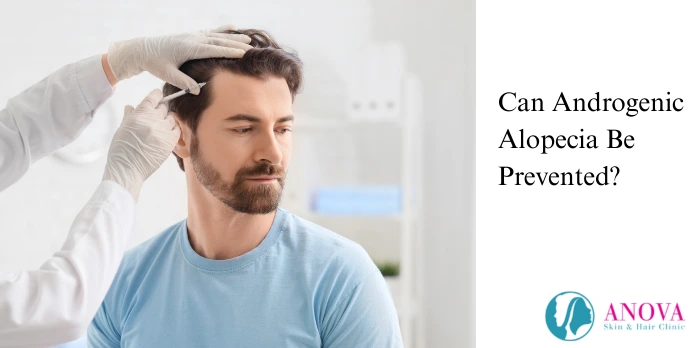
Genetic factors are often significant in the development of androgenic alopecia, so its full prevention is not always possible. People with inherited sensitivity of the hair follicles to hormones can experience gradual hair loss, even with healthy hair care habits.
But early diagnosis of androgenic alopecia can be treated medically before it progresses, and thus, this can be used to greatly reduce its advancement and even save the remaining hair. The promptness of treatment will enhance the results, minimize further miniaturization of follicles, and maintain hair health in the long term due to the regularity of the treatment.
When to See a Dermatologist
It is also necessary to visit a dermatologist at the appropriate time to be properly diagnosed and managed with hair loss. Professional assessment at an early age can be used to detect androgenic alopecia and prevent further development.
- Gradual thinning of hair
If you notice your hair becoming thinner or less dense over time, especially on the scalp’s top or crown, it may be an early sign of androgenic alopecia. A dermatologist can assess the pattern and suggest appropriate treatment. - Family history of pattern hair loss
In case you find your hair thinning or losing its density with time, particularly on the top or the crown of the scalp, it is a possible early indication of androgenic alopecia. A dermatologist is able to evaluate the pattern and recommend proper treatment. - Increased hair shedding with visible scalp exposure
Excessive hair shedding combined with increased scalp visibility may indicate progressing hair loss. Professional evaluation helps determine whether the cause is androgenic alopecia or another condition.
A dermatologist will be able to offer a specific treatment plan, track, and give long-term advice on managing androgenic alopecia and treating it.
Conclusion
Androgenic alopecia is another type of progressive hair loss that is mainly caused by genetic and hormonal factors. Though it is sometimes impossible to fully prevent, early diagnosis, proper treatment, and long-term care can greatly slow down its development and enhance the general look and density of hair.
Understanding androgenic alopecia empowers individuals to take an active role in managing their hair health. Seeking expert guidance at the right time allows for personalized treatment plans, better outcomes, and improved confidence in handling hair loss effectively.
FAQs:
1. What is the reason for alopecia?
Alopecia is the loss of hair, and it may happen due to a variety of reasons depending on its type. Usually, it is caused by genetics, hormonal variations, autoimmune disorders, stress, nutritional deficiencies, and some medical interventions. In conditions like androgenic alopecia, hair loss is mainly driven by the genetic sensitivity of hair follicles to hormones, while alopecia areata occurs due to an immune system response.
2. How to fix alopecia?
The alopecia treatment is based on its cause. Certain forms of alopecia may be treated or even corrected using drugs, topical applications, or in-clinic surgeries. The diagnosis should be done early, because early treatment can delay the loss of hair and even stimulate the growth in some cases. Depending on the nature and the extent of alopecia, a dermatologist can prescribe the most appropriate treatment plan.
3. Do people recover from alopecia?
The alopecia recovery is variable. A small number of people, particularly those with alopecia areata, can have their hair grow back partially or entirely with time. In other disorders, e.g., androgenic alopecia, hair loss is progressive but can be effectively treated with continued therapy. The results are determined by the cause, initial intervention, and regularity of care.
4. How to cure alopecia areata naturally?
Alopecia areata has no natural cure that has been proven. Nevertheless, some lifestyle interventions like stress management, healthy diet, mild hair care, and overall health can be used to promote hair growth in combination with medical intervention. Natural methods are most effective as complementary treatments and not substitutes for professional dermatological treatment.