
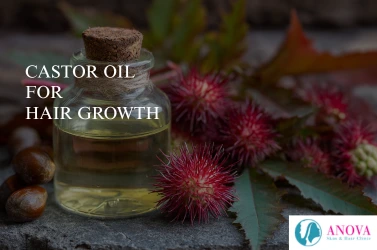
Castor oil as a hair growth remedy has been one of the most popular natural remedies online over the last few years. From the social media buzz to the home remedies used for generations, most people believe that castor oil can help hair grow longer, thicker, and healthier.
But does it really work?
Castor oil is rich in a fatty acid called ricinoleic acid, which is known for its moisturizing properties. Although scientific evidence to support the fact that it actually grows new hair is minimal, it can be used to make the scalp healthier, which is critical for stronger hair.
In this complete guide, you’ll learn the proven benefits of castor oil for hair, how to apply castor oil for hair growth step by step, and how often to use it.
What Is Castor Oil and How Does It Help Hair Growth?
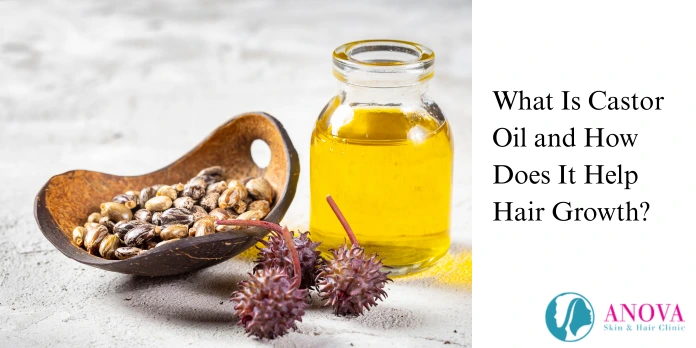
Castor oil is a natural vegetable oil that is thick and extracted from castor plant seeds. It has been a part of age-old beauty and wellness practices due to its high moisturizing and nourishing effects. The oil contains a fatty acid known as ricinoleic acid that ensures that the skin and hair remain damp.
When people talk about using castor oil for hair growth, they are usually referring to its ability to improve scalp health rather than directly growing new hair.
Castor oil as a hair growth aid can be used in the following way:
- It deeply hydrates the scalp and prevents dryness.
- It reduces dryness-related breakage.
- It coats hair strands, making them appear thicker and smoother.
- It supports a healthier scalp environment for stronger hair.
It should be known that castor oil does not perform miracles in growing new hair follicles or immediately growing bald spots. Rather, it can be used to make hair look fuller, shinier, and healthier by enhancing the moisture of the scalp and preventing hair damage over time.
Proven Benefits of Castor Oil for Hair
1. Deeply Moisturizes Dry Scalp
Itching, flaking, tightness, and poor hair roots may occur in the long run because of a dry scalp. Castor oil is highly fatty and thick, and it seals moisture within the skin and does not allow it to become too dry.
When your scalp stays properly hydrated:
- Hair roots feel stronger because dryness no longer weakens them at the base.
- Flakiness reduces as the skin barrier becomes healthier and less irritated.
- Hair feels healthier since strong roots support better hair quality.
This is one of the most important benefits of castor oil for hair, especially for people with dry or rough scalp conditions.
2. Reduces Hair Breakage
When drying and splitting, dry and damaged hair is easy to snap when it is being combed or when it is being styled. Castor oil creates a protective layer of light silvery coating on every strand, and this prevents loss of moisture.
This protective layer:
- Protects hair from dryness caused by heat styling or environmental damage.
- Reduces split ends by keeping strands more flexible and less brittle.
- Makes hair feel stronger because well-moisturized strands bend instead of breaking.
When breakage reduces, your hair retains more length over time, which is why castor oil for hair growth is often linked to longer-looking hair.
3. Makes Hair Look Thicker
Each of the hair strands is covered by the castor oil, and it may make it look a bit thicker and fuller. This is a short-lived effect that is visible particularly to individuals who have fine or thin hair.
It does not enlarge the hair density permanently, but it enhances appearance by:
- Adding weight to thin strands, making them look less flat.
- Improving texture, so hair feels smoother and more manageable.
- Reducing frizz, which helps hair look more polished and voluminous.
This is why many people believe castor oil for hair growth makes hair thicker — the improvement in texture creates the illusion of more volume.
4. Improves Scalp Health
Healthy hair is supported by a healthy scalp. When the scalp is dry, it is irritated, or unbalanced, it may cause the hair to be weak or dull.
Castor oil contains natural fatty acids that help:
- Maintain scalp moisture, preventing excessive dryness.
- Support balanced oil production, especially when used in moderation.
- Reduce dryness-related irritation, making the scalp feel calmer.
Hair follicles are able to operate more efficiently in a healthy scalp by maintaining a healthy balance of the scalp that will grow stronger over time.
5. Adds Shine and Softness
Castor oil can be used to make your hair look presentable in case it is dull and rough. It works by smoothing the outer layer of the hair shaft, known as the cuticle.
When the cuticle lies flat:
- Hair reflects more light, making it appear shinier.
- Strands feel softer because rough edges are smoothed down.
- Hair becomes easier to manage, especially during combing or styling.
This is one reason why the benefits of castor oil for hair are often noticed quickly after application.
6. Helps Reduce Dandruff Appearance
A flaky head may also be caused by a dry scalp that may appear like dandruff. Since castor oil deeply hydrates the scalp, it may help reduce flakes caused by dryness.
By improving moisture levels:
- The scalp becomes less flaky.
- Itching and tightness may reduce.
- The overall scalp condition improves.
However, when the fungi or the medical conditions of the scalp are the causes of dandruff, it might be necessary to engage a professional and use castor oil which might not be enough to resolve the problem.
7. Supports a Healthier Hair Growth Environment
Although castor oil does not have a direct stimulative effect on new hair follicles and bald patches, it provides an environment in which stronger hair is able to grow.
By:
- Reducing breakage,
- Keeping the scalp moisturized,
- Protecting hair strands from damage,
It supports the natural hair growth cycle. When hair breaks less and the scalp stays healthy, hair can grow longer and appear fuller over time.
How to Apply Castor Oil for Hair Growth Step by Step
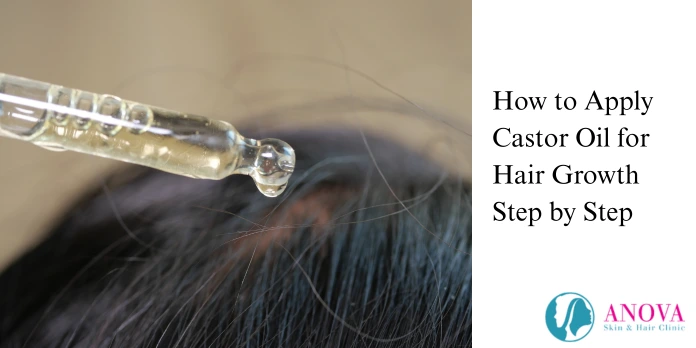
Castor oil was used by many people in a misguided manner, either applying too much of it, not diluting it, or failing to wash it properly. Since castor oil is dense and sticky, proper application does count. This is the step-by-step process of how to use castor oil to grow hair in a safe and easy manner.
Step 1: Choose the Right Type
Castor oil is used in two types, which are mostly applied to hair:
- Cold-pressed castor oil
- Jamaican black castor oil
Cold-pressed oil is produced without heat, and it is a little lighter in texture. Jamaican black castor oil is darker and heavier as it is processed in a different way. Both are capable of providing comparable moisturizing properties.
Regardless of the type you use, ensure that it is pure, without hexane and not with added chemicals or artificial smell. Using high-quality oil reduces the risk of irritation and gives better results.
Step 2: Mix with a Carrier Oil
Castor oil is extremely thick, which makes it difficult to spread evenly on the scalp. Applying it alone may also make washing harder.
This is why it is better to blend it with the lighter carrier oils like:
- Coconut oil
- Jojoba oil
- Almond oil
Mixing helps:
- Make the texture smoother and easier to apply.
- Improve absorption into the scalp.
- Reduce excessive greasiness and buildup.
A simple ratio is 1 part castor oil to 1 part carrier oil.
Step 3: Warm the Oil Slightly
Slightly warming the oil can help it absorb better into the scalp. Warm oil also feels very relaxing to apply.
To do this safely:
- Place the oil mixture in a small bowl.
- Put that bowl inside a larger bowl of warm water for a few minutes.
Do not overheat the oil. It must be warm and not hot, as it may irritate the scalp.
Step 4: Massage Into the Scalp (5–10 Minutes)
With your fingertips, rub the oil in circular motion on your scalp. Concentrate on the roots and not only on the hair length.
Massaging helps to:
- Improve blood circulation to the scalp.
- Distribute the oil evenly.
- Relax the muscles on the scalp and relieve tension.
Always take time to massage (at least 5-10 minutes) to achieve more coverage and relaxation.
Step 5: Leave It On (30–60 Minutes)
You should keep the oil on your head for at least 30 minutes to enable it to penetrate the skin and your hair strands.
In case your scalp is not sensitive, you can leave it there up to an hour. Most people, however, do not need to leave castor oil overnight, and it can build up or become heavy.
Step 6: Wash Thoroughly with Mild Shampoo
Since castor oil is thick, proper washing is important. Use a gentle, sulfate-free shampoo and rinse thoroughly.
You may need to shampoo twice to:
- Remove oil buildup completely.
- Prevent greasy residue.
- Keep the scalp feeling fresh and clean.
You can add a light conditioner to the hair lengths after washing, in case it is necessary.
This is the right way to make sure that you understand how to use castor oil on the hair most safely and efficiently. Proper use not only enhances comfort but also maximizes the possible value of castor oil in the growth of hair.
How Often Should You Use Castor Oil on Hair?
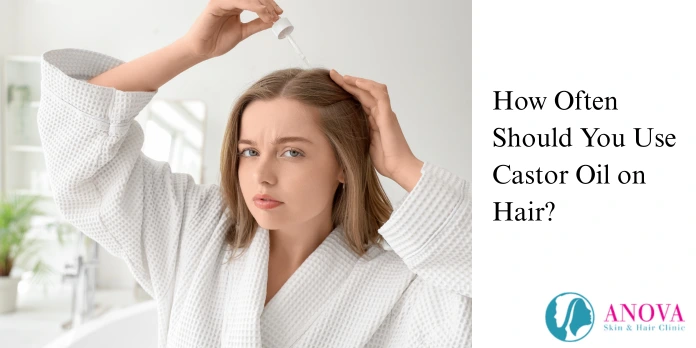
The frequency is equally important when it comes to using castor oil to grow hair as much as how it is applied. Castor oil is very thick and heavy, and therefore, excessive use may cause more harm than good. To most individuals, using it 1-2 times a week suffices to enjoy the moisturizing and strengthening effects of it.
Using castor oil too frequently can:
- Make hair greasy – As the oil is heavy, it may lie on the head and the hair and appear oily even after a shower.
- Cause product buildup – When the oil builds up on the scalp, it may clog the pores and cause the hair to feel heavy.
- Weigh hair down – Thin or fine hair can also lose volume and become flat when it has been oiled too often.
Your hair type also plays an important role.
- In case of an oily scalp, once a week, castor oil should suffice. This prevents excess oil production and buildup.
- In case of dry or damaged hair, you can possibly go with it twice a week as your head requires additional moisture.
The key is to observe how your hair responds. If it feels heavy, sticky, or difficult to wash, reduce the frequency. When used in moderation, castor oil for hair growth can support scalp health without causing unwanted greasiness.
Simple Castor Oil Hair Masks You Can Try
The effectiveness of the castor oil usage as a hair growth may also be enhanced by adding some other natural products and using it as a more convenient item. These basic masks are used to feed the head and fortify the hair without over greasing it.
Castor Oil + Coconut Oil
Mix equal parts of castor oil and coconut oil. Coconut oil helps thin the thick texture of castor oil, making it easier to spread.
Apply to your scalp and hair lengths, massage gently, and leave it on for about 45 minutes before washing.
The mask is used to moisturize dry hair and minimize hair breakage, as well as enhance softness.
Castor Oil + Aloe Vera
Combine castor oil and fresh aloe vera gel (2 tablespoons). Aloe vera is used to calm down and moisturize the head.
Rub over the scalp primarily and leave for between 30 and 45 minutes before washing off.
This mask is particularly suitable to dry or slightly irritated head.
Castor Oil + Onion Juice
Take a little castor oil and mix with onion juice and rub on the head. Allow to dry in 30 minutes and then wash thoroughly.
This combination can be used to benefit scalp stimulation and enhance roots in the long run. Make sure to always do a patch test in case you have a sensitive skin.
Use these masks once a week to avoid buildup while still enjoying the benefits of castor oil for hair growth.
Conclusion
One of the most popular natural remedies for hair is castor oil, which is highly moisturizing and conditioning in nature. Although it does not work directly to produce new hair follicles or cure baldness, it can greatly enhance the hydration of the scalp, decrease the breakage, and the overall appearance of the hair. When the scalp is healthy, and strands are protected from damage, hair naturally looks thicker, shinier, and stronger over time.
The secret of obtaining results is to apply castor oil in the right way and in a regular manner, yet not to overapply it. The expectations must be realistic because the outcomes will differ in individuals. In the case of excessive or persistent loss of hair, you’d better consult a dermatologist to make an appropriate assessment and treatment.
FAQs:
Can castor oil regrow bald spots?
There is no strong scientific evidence that castor oil for hair growth can regrow bald spots caused by genetics or medical conditions. It may improve scalp health and reduce breakage, which can make hair look fuller, but it does not create new hair follicles.
How long does it take to see results?
You may notice softer and shinier hair within a few weeks. Visible improvement in thickness or reduced breakage may take 2–3 months of consistent use.
Can I leave castor oil overnight?
Yes, but it is not necessary. Castor oil is dense and therefore staying over might lead to accumulation or result in greasy hair. To the majority, 30-60 minutes suffice.
Is black castor oil better?
The Jamaican black castor oil and cold-pressed castor oil perform in the same way. Processing and texture are the biggest difference. They both offer moisturizing properties.
Can I use castor oil daily?
Daily use is not recommended. Castor oil is heavy and thus when applied excessively it may accumulate and drag hair down. 1-2 times per week is the best.