
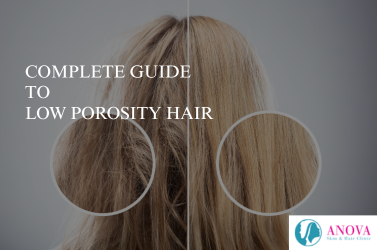
There are a lot of people who are frustrated by the fact that their hair does not become moist despite the number of products they apply. The last one is when your conditioner is placed over the strands, it takes ages to dry, or the moisture cannot penetrate, then you may have Low Porosity Hair.
Learning about Low Porosity Hair will entirely transform your treatment of your hair. Once you understand what your hairactually needs, then you can quit spending your money on the wrong products and begin to notice the actual improvement.
In Annova Skin and Hair Clinic, experts are commonly exposed to clients with a problem because they lack knowledge of their hair porosity. This guide is clear and practical in everything.
What Is Low Porosity Hair?
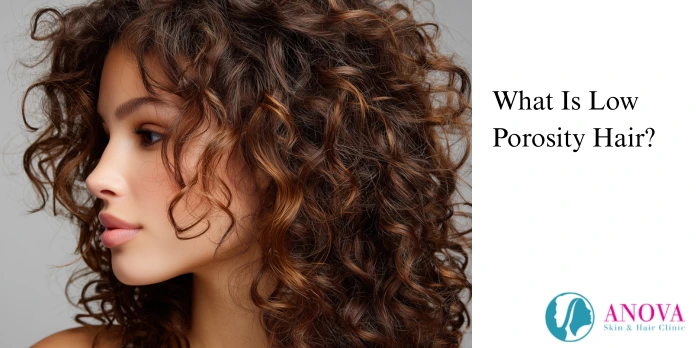
Nonporous Hair is not bad hair or damaged hair. It just denotes that your hair cuticles are tightly closed and hence they are difficult to hydrate. When it becomes moist, it lasts longer.
Knowing the Low Porosity Hair will make you choose the correct routine. You do not battle your hair, but learn how to do it.
Understanding Hair Porosity in Simple Terms
Hair porosity is a characteristic of the hair that takes in and retains moisture.
And consider your hair to be a sponge:
- High porosity = sponge having large holes (absorbs fast, loses fast)
- Medium porosity = medium-sized sponge.
- Low Porosity Hair = tight sponge (slows up in absorbing but holds moisture)
At the beginning, Low Porosity Hair repels water, and this is why washing and moisturization are challenging.
The Science of Hair Cuticles
The hair has layers in each strand of hair, with the cuticle being the outermost protective layer. In Low Porosity Hair:
- Cuticles are tightly packed
- The layers are overlapping like roof shingles.
- Diffusion of moisture and products is difficult to get into the hair shaft.
On the one hand, such a tight structure helps to avoid the destruction and breaking of hair under the influence of environmental factors, but on the other hand, it may cause an accumulation of products and reduce the rate of water and conditioner absorption. This biology can be used to understand how to create the appropriate hair care regimen.
Low, Medium, High Porosity Hair
- Low Porosity Hair: slow penetration of moisture, shiny, but not easily penetrated by products, and tends to accumulate.
- Medium Porosity Hair: The hair is easy to handle, it absorbs and holds water, and it is also very flexible when it comes to styling.
- Highly porous Hair: Takes in products very fast, loses moisture very fast, frizzy, split ends, and damage.
Know your type of hair porosity and apply it to your care routine to achieve the best results.
What Causes Low Porosity Hair?
Low Porosity Hair is usually hereditary. Nonetheless, some of your everyday environmental and care routines may affect the properties of your hair. The causes will make you a better manager of your hair.
Genetic Factors
Low Porosity Hair is naturally born to many people. In case your parents or siblings are not prone to moisture, you are very likely to be the same. A significant part is played by genetics, but not the only one.
Product Buildup and Residue
Layers on Low Porosity Hair can be produced using heavy products such as butters, oils, or serums that contain silicone. This accumulation does not, in the long run, allow the absorption of the new products. Symptoms are a sticky, greasy feeling of the hair or a heavy feeling in the hair. It is important to get rid of the accumulation by washing hair using clarifying shampoos or detoxing treatments.
Hard Water and Environmental Factors
Hard water contains minerals that deposit on the hair strands, and this complicates the penetration of moisture. Layers can also be added to the cuticle through environmental influences such as dust, pollution, and UV radiation.
Overuse of Protein Treatments
Blow Dart Hair is delicate to a great deal of protein. Protein treatment can temporarily make hair stronger, but excessive use may result in making the hair rigid and brittle as well as resistant to water. Combine protein with fluid to ensure elasticity and luster.
How to Tell If You Have Low Porosity Hair
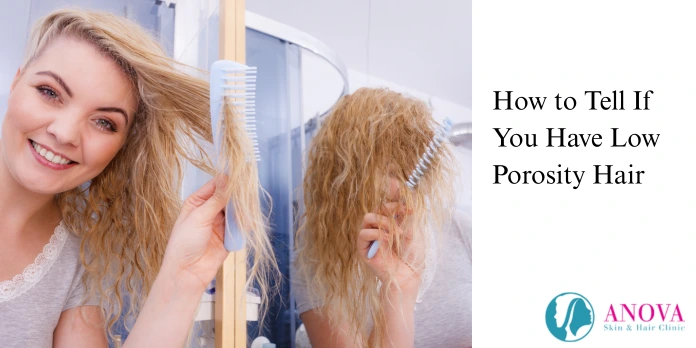
The proper identification of your hair type will make sure that you use the correct products and routines. The following are some of the sure ways:
Common Signs and Symptoms
You can have Low Porosity Hair when:
- The hair has been wet for a long time.
- Products lie on the surface, and they are not absorbed.
- Hair dries very slowly
- The moisture does not stay all day long.
- The hair is shiny, but dry.
These symptoms show that the moisture has difficulties in making its way into the hair shaft, which is the characteristic of Low Porosity Hair.
The Float Test (Step-by-Step)
- Take a clean, shed hair strand.
- It should be left in a glass of water.
- Observe for 3-4 minutes.
- Floats on top: Most probably Low Porosity Hair.
- Slow sinkage: medium porous.
- Sinks quickly: High porosity
It is an easy-to-do test carried out at home, which is a good place to begin in order to determine the presence of Low Porosity Hair.
Professional Hair Assessment at a Clinic
Home tests are good to give a direction, but when it comes to checking a patient, a clinic test, such as Annov,a is more precise. Specialists can:
- Focus on the structure of the cuticle with the help of magnification.
- Before you put on your products, here are some of the products that would fit your hair.
- Develop a tailored treatment intervention.
This makes the results quicker and safer than the trial-and-error techniques.
Challenges of Low Porosity Hair
Low Porosity Hair is healthy, yet it has peculiar challenges that would need special solutions.
Moisture Resistance
As the cuticles are closely arranged, water and products are slower to enter the skin. This can be frustrating because the usual hair care practices can no longer work.
Solution: Warm or steam the cuticles a little, and moisture should be introduced. Light products are also better penetrators.
Product Buildup
Low Porosity Hair will be piled with heavy creams, oils, or silicone-based products, which make the hair dull and sticky.
Remedy: 1. Elucidation of shampoos, detoxes, and restricting heavy ones assists in keeping hair well.
Difficulty in Deep Conditioning
Normal deep conditioning is not always effective since the product is on the surface of the hair. Deep conditioning is enhanced by the application of heat in order to facilitate absorption.
Observation: Warm towel, steam cap, or heated hood should be used (20-30 minutes of treatment).
Scalp Issues from Residue
A combination of products and environmental factors may result in follicles clogging up, and they cause:
- Itchy scalp
- Dandruff
- Weak or slow hair growth
These problems can be avoided by regular scalp detox and adequate cleansing.
How to Care for Low Porosity Hair Properly
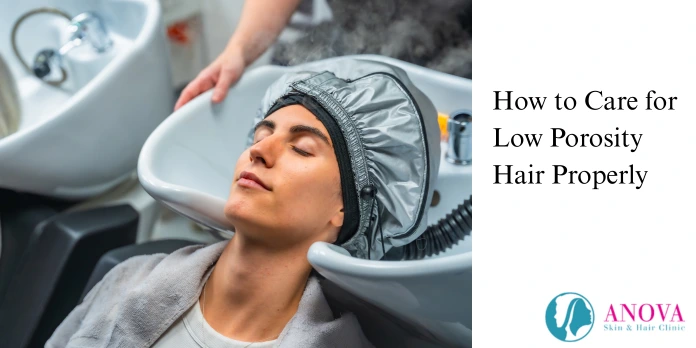
Technique and product choice are brought in with proper care. The following are the recommendations by experts.
Why Heat Helps Open the Cuticle
Slight heat raises the cuticle that is tightly closed, after which the products and moisture penetrate better. You can use:
- Before conditioning, warm water is rinsed.
- Steam treatments
- Deep conditioning heat caps.
Best Water Temperature for Washing
- The cuticle is opened by warm water sufficiently to take up moisture.
- Cuticle is kept tightly closed by cold water.
- Warm water may destroy hair and take away the natural oils.
To ensure maximum hydration, attempt to have lukewarm to warm water.
Correct Product Application
- Put conditioners and treatments on dry, not wet, and not dry hair.
- Sprinkled throughout the root to tip.
- It is important not to overload with products.
Importance of Clarifying Shampoos
- Eliminates accumulation and residue of products.
- Apply after every 2-4 weeks based on the usage of the product.
- plays with hair before the deep conditioning and treatments.
Best Ingredients for Low Porosity Hair
It is important to select the appropriate ingredients in the pursuit of hydration and manageability.
Lightweight Moisturizers
- Water-based leave-ins
- Light conditioning sprays
- Penetration serums were developed.
They are absorbed fast without being greasy.
Humectants That Work
- Glycerin: Attracts water into the strand of hair
- Aloe Vera: Soothes and moisturizes.
- Honey: A humectant that is natural and keeps the moisture.
Ingredients to Avoid
- Heavy butter such as shea or mango butter.
- Viscous oils such as castor oil (except in small quantities)
- Excess protein
These do not penetrate; rather accumulate on the hair.
Ideal Hair Care Routine for Low Porosity Hair
Unity and organization are more important than costly products.
Weekly Routine
- Gentle shampoo
- Lightweight conditioner
- Damp hair Leave-in moisturizer.
- Minimal styling products
Monthly Detox Routine
- Clarifying shampoo
- Scalp massage
- Steaming to clean the accumulation.
Deep Conditioning Routine
- Apply to damp hair
- Apply heat (steam cap or hot towel)
- Leave 20-30 minutes
- Rinse thoroughly
Professional Treatments That Help
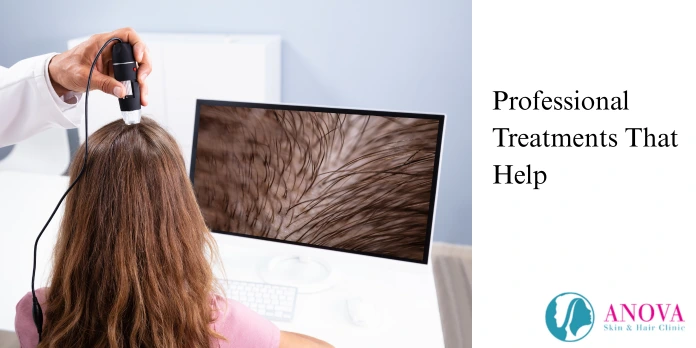
Home care is not sufficient at times. Clinics offer more deeply penetrating treatments than those in stores.
Steam Therapy
- Opens cuticles
- Increases the level of moisture absorption.
- Restores softness and shine
Scalp Detox Treatments
- Gets rid of accumulation and flaky skin.
- Improves follicle health
- Supports hair growth
Clinic-Grade Hydration Therapies
- Sophisticated serums enter further.
- Specialized in Low Porosity Hair.
- Quicker outcomes than home-made interventions.
When to Seek Expert Help
Consult a professional in the instance of:
- However, hair is dry regardless.
- Breakage or frizz increases
- Scalp issues persist
Common Mistakes to Avoid
The primary measure of dealing with Low Porosity Hair is avoiding mistakes.
Using Too Many Products
- Congestion is caused by overloading.
- Use the light water-based formula only.
Skipping Clarifying Washes
- Avoids the build-up of an accumulation.
- Apply explanatory shampoos.
Overloading with Protein
- Excessive protein causes stiffness in hair.
- Balance with hydration
Applying Products on Dry Hair
- Moisture is absorbed more in wet hair.
- Wet or slightly damp hair preceding leave-ins.
Why Professional Diagnosis Matters
Professional advice is time-saving, cost-saving, and frustration-free. Experts can:
- Identify exactly what type of hair.
- Safe and effective products should be recommended.
- Modify tailor-made treatment options.
- Eliminate the loss of hit and miss.
Final Thoughts
Low Porosity Hair is not an issue; it is one of the types of hair. Even the hardest hair can be made healthier, easily manipulated, and beautiful with the proper treatment. Keeping your hair hydrated, using lightweight products, clarifying routines, and having some professional treatments may help to change your hair.
The first step is understanding low porosity Hair. The second one is to act with wisdom and expert advice. To the people who have tried it all and are still struggling, Annova Skin and Hair Clinic will provide a safe, effective, and personalized solution.
To begin with Healthy, moisturized and shiny hair, it is with the knowledge of your Low Porosity Hair.